Flaounes Recipe—Greek Cypriot Easter Cheese Pastries
Home » COOK » Recipes » International Recipes » Greek Cypriot & Greek Recipes »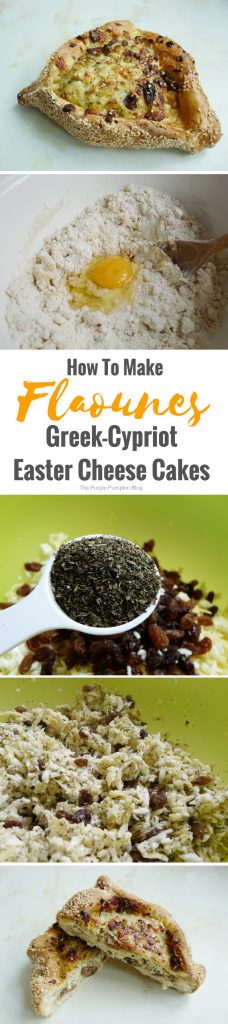
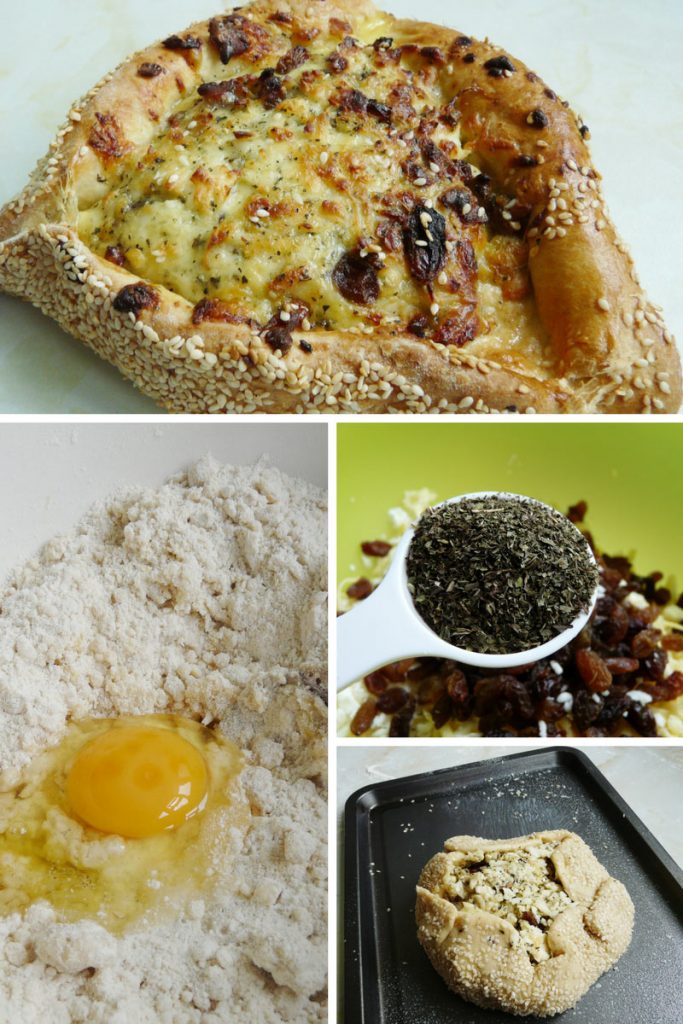
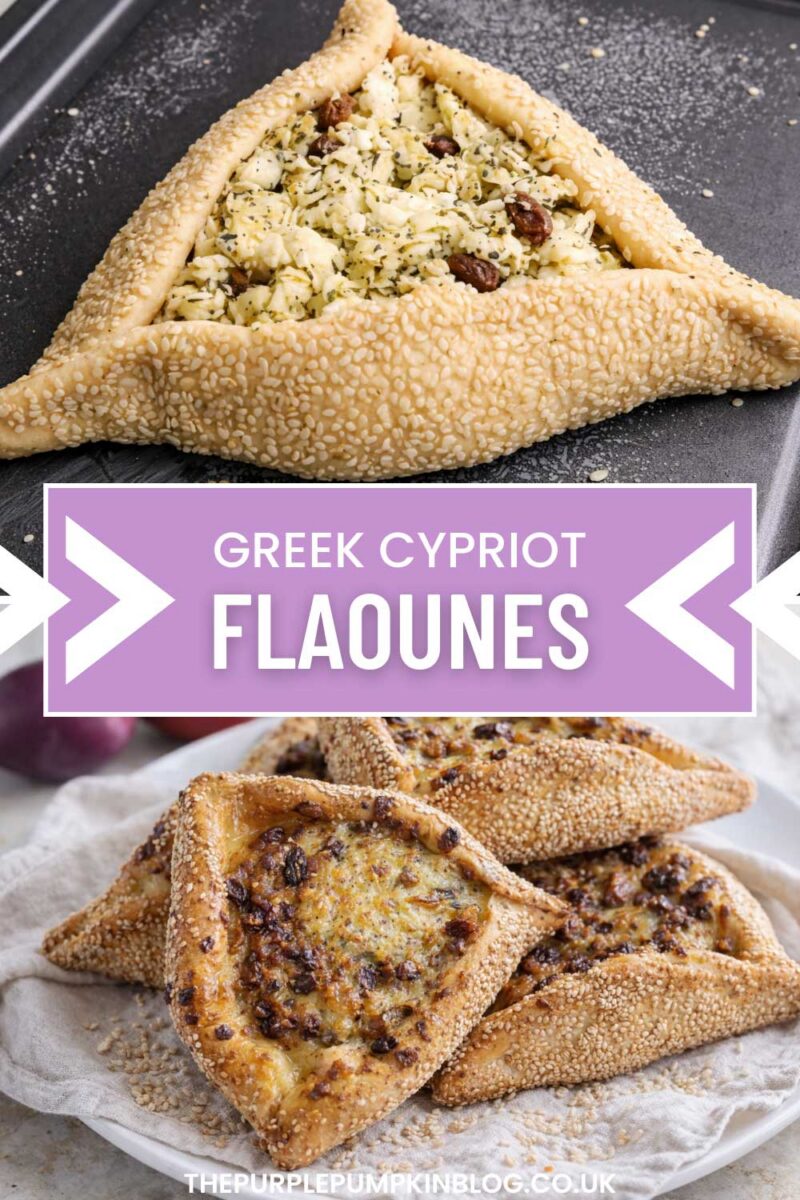
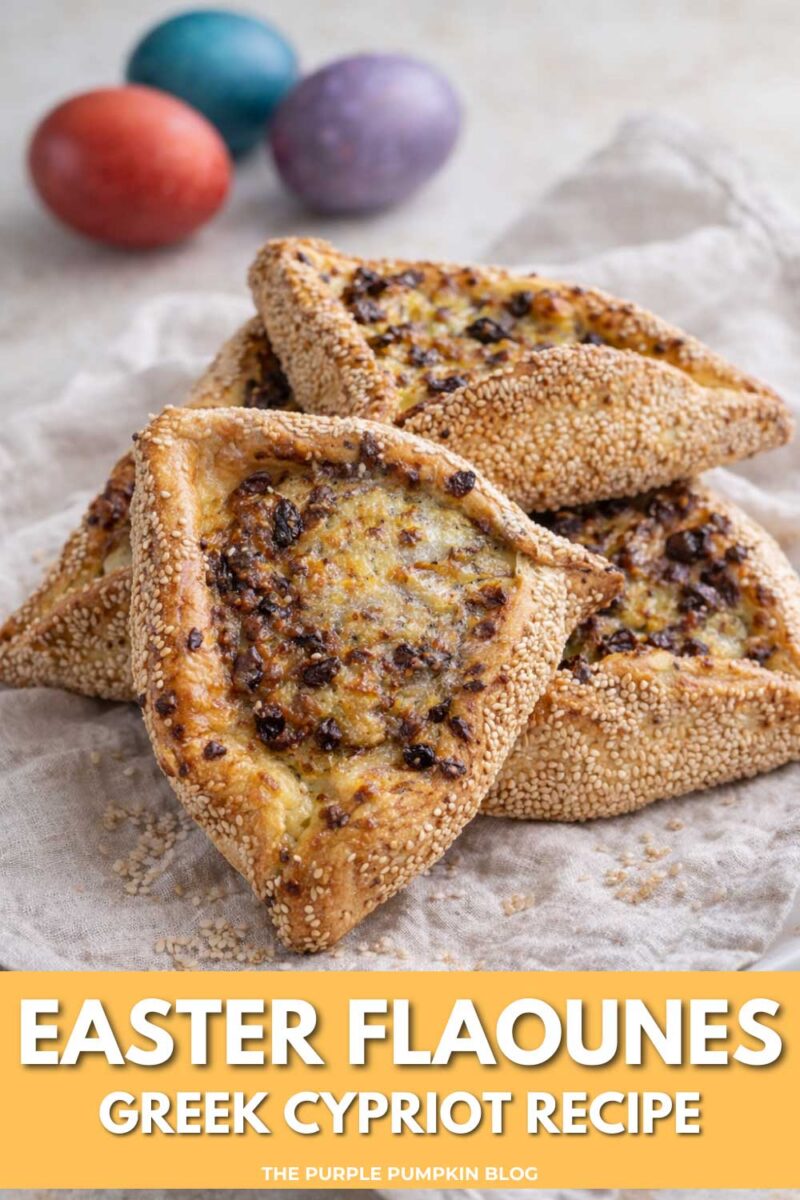
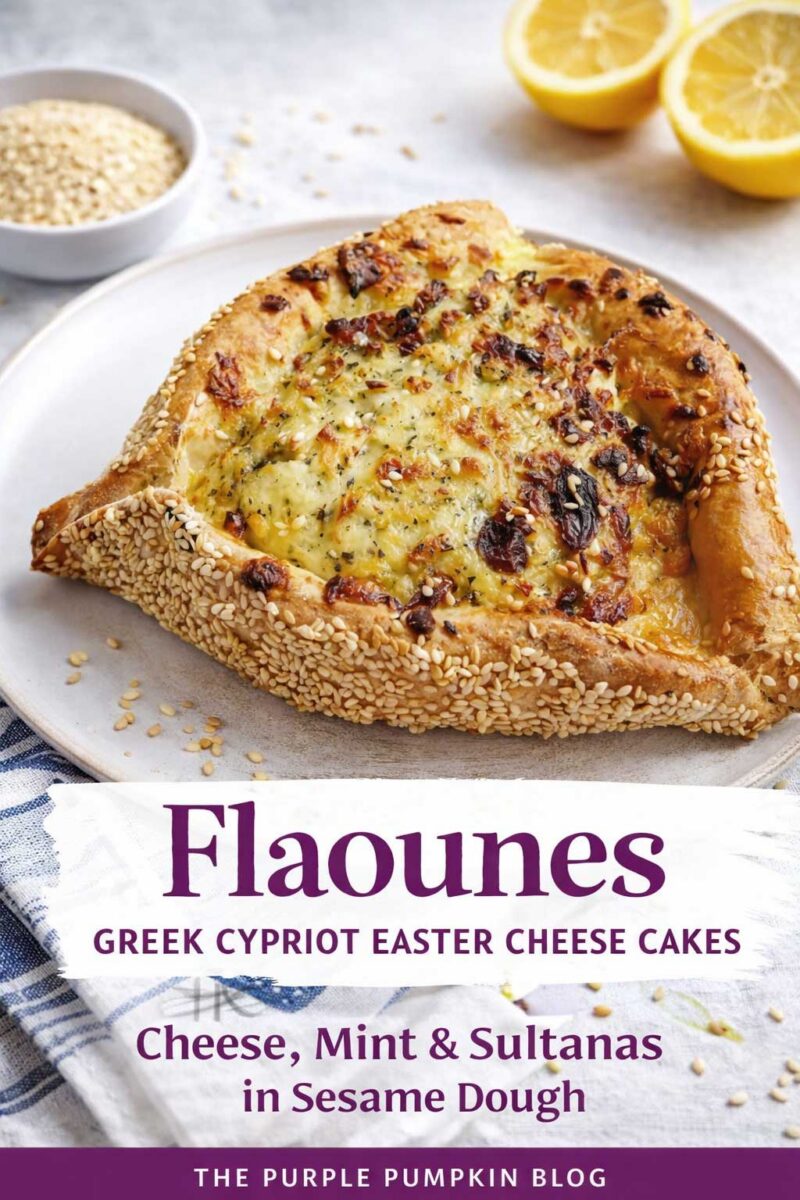
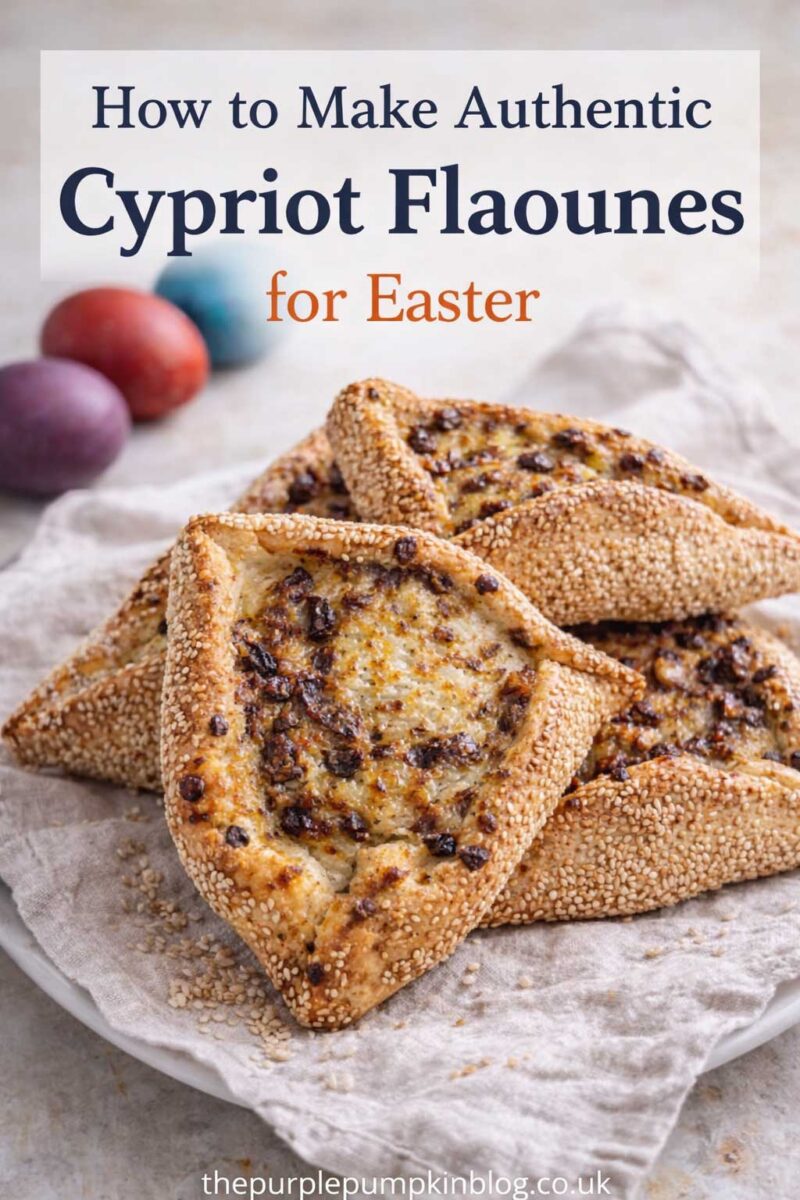
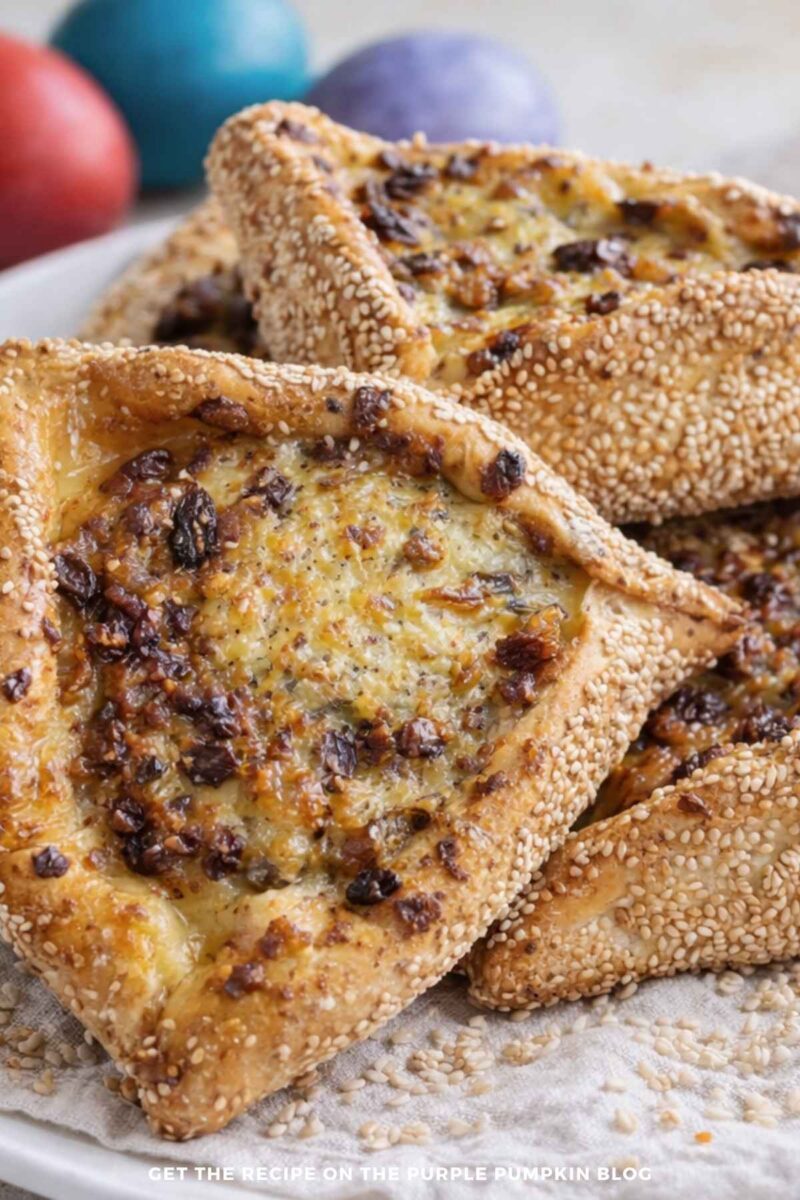
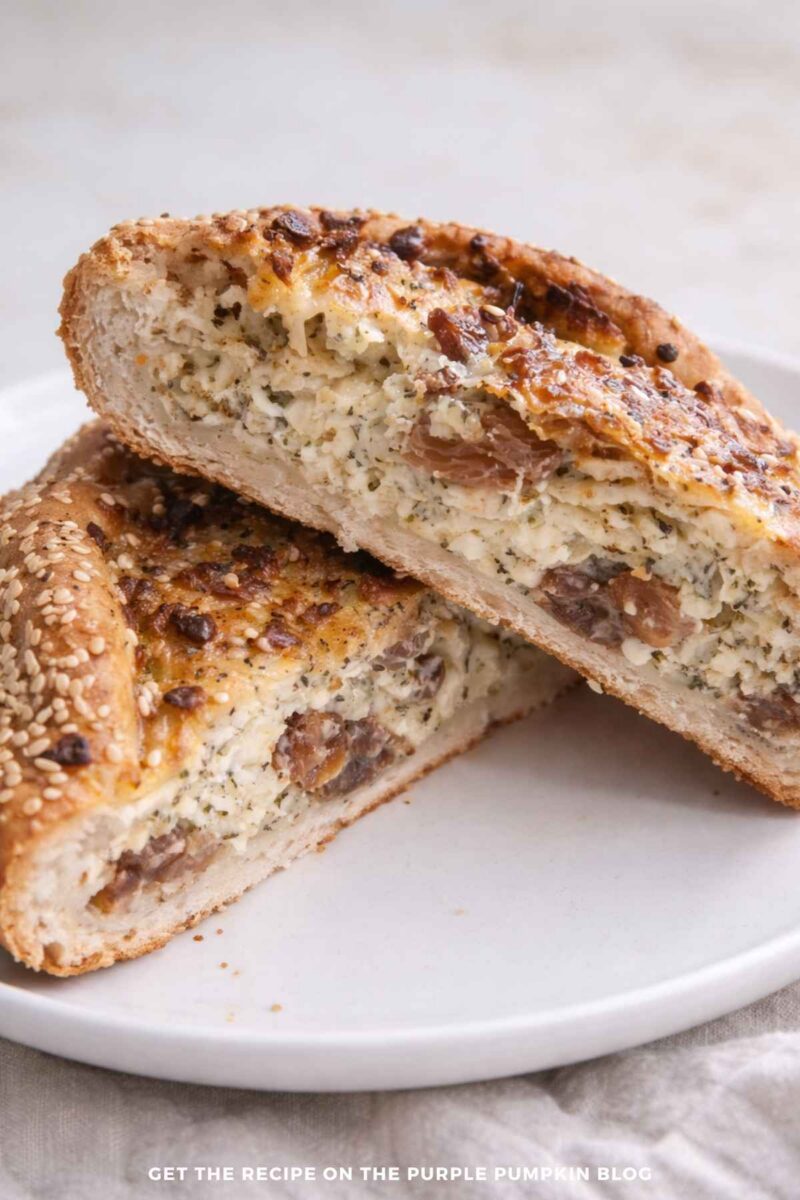
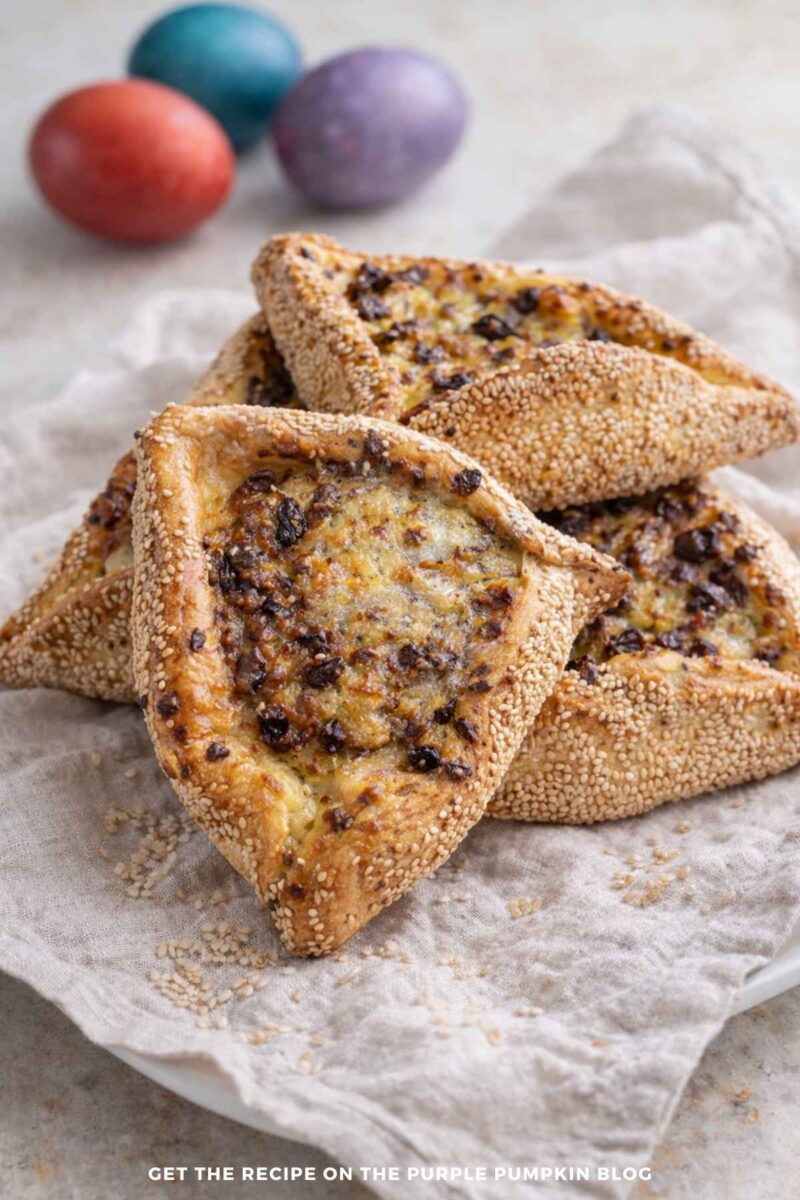
Flaounes are Greek Cypriot cheese pastries filled with cheese, mint, and sultanas, wrapped in soft, sesame-coated dough.
These Easter pastries are traditionally made for Greek Orthodox Easter and pair perfectly with a cup of tea or coffee. They take a little time to make, but trust me—they are absolutely worth it!

Affiliate Disclosure
We have included affiliate links to products and services related to this post.
We may earn a commission if you purchase after clicking on those links.
As an Amazon Associate, I earn from qualifying purchases.
Read Our Full Disclosure Policy and Privacy Policy
Why You’ll Love This Flaounes Recipe
- Authentic and nostalgic flavors—a traditional Cypriot Easter recipe that brings a taste of the Mediterranean to your kitchen
- Unique sweet-savory combination—cheese, mint, and sultanas create a flavor that’s unlike anything else
- Perfect for Easter celebrations—a must-make bake for spring gatherings and holiday tables
- Make-ahead friendly—the filling can be prepared in advance, making prep easier
- Freezer-friendly—great for batch baking and enjoying later
Ingredients
The ingredients and tools for this recipe are conveniently linked to online retailers, including Amazon, Amazon Fresh, Instacart, and Walmart. The quantities are in the recipe card.
- Strong White Flour—or bread flour to create the pastry.
- Dried Yeast—helps the dough rise
- Sugar—adds a touch of sweetness to the dough
- Sesame Seeds—used to coat the pastry exterior
- Halloumi—a Greek Cypriot cheese made from goat and sheep’s milk
- Mild Cheddar—used as a substitute for traditional flaouna cheese
- Sultanas—also known as golden raisins. They add a subtle sweetness to balance the savory cheese
- Dried Mint—a traditional flavor in Cypriot cooking
- Masticha—also known as mastic gum, an aromatic resin used in baking for a distinctive flavor
- Chilled & Dairy: Butter, Milk, Eggs
The complete ingredient list, along with their measurements, is provided on the recipe card. The Purple Pumpkin Blog uses both cups and weighted measurements in its recipes, making American cups and kitchen food scales valuable tools for trying all the recipes. We provide measurements in US customary, imperial, and metric units. Still, it’s essential to note that while you can combine cup measurements with weighted measures, never mix US customary/imperial units (pounds, ounces, pints, etc.) with metric units (kilograms, grams, liters, etc.).
What Do Flaounes Taste Like?
With salty Halloumi and Flaouna* cheeses, sweet sultanas and fragrant mint, the taste is a bit tricky to describe to someone who hasn’t eaten them before!
Then there are the sesame seeds and masticha (a resin from Mediterranean pistacia trees), which add another flavour dimension. All that said, if you are a fan of sweet and savoury food combinations, then these pastries are ones to try.
As someone with Greek-Cypriot heritage, I grew up surrounded by all kinds of incredible food. So many Cypriot dishes take me right back to childhood holidays in Cyprus—and flaounes are among the special recipes that instantly transport me there.
I don’t often get to eat them, as it means a drive to North London, where there is a large Greek community, to buy them…so I thought I would dig out my Cypriot cookbook and try to make them myself. My Cypriot dad gave my homemade ones a big thumbs up, so I know they taste authentic!
*Flaouna Cheese
Flaouna is a hard, sheep and goat’s milk cheese, produced in Cyprus. Unless you have a Cypriot grocery store nearby, it will be difficult to find.
In this recipe, I’ve used mild Cheddar, which you’ll find in any supermarket. (Some recipes use other cheeses like gruyère, pecorino, or parmesan.)
About Masticha
Masticha (other spellings: mastika, mastiha) is also known as mastic gum and has a unique flavour, described as sweet, earthy, and fresh, with strong notes of pine and cedarwood.
My bottle of powdered masticha came straight from Cyprus, but you can find it online, and, in my opinion, it’s the secret ingredient for this recipe. It is also sold in resin “tears”, which can be ground to a powder with a mortar and pestle.
However, if you can’t find it, and leave it out, you won’t know what flavour you’re missing, so…you won’t miss it—IYKWIM!
Another ingredient often used in flaounes is mahleb (or mahlepi), an aromatic spice made from the seeds of St. Lucie cherries. It has a floral and almond flavour with a hint of vanilla.
My recipe, which I found in one of my very old Cypriot cookbooks, didn’t include it, so I haven’t included it.
Flaounes—Greek Cypriot Easter Cheese Bread
Ingredients
For the Cheese Filling
- 350 grams halloumi grated
- 150 grams mild cheddar grated
- 120 grams sultanas golden raisins
- 1 tablespoon dried mint
- 2 eggs beaten
- 1 teaspoon baking powder
For the Dough
- 500 grams strong white flour
- 1 teaspoon sugar
- 7 grams dried yeast
- ¼ teaspoon salt
- 1 teaspoon masticha powder
- 125 grams butter melted
- 2 eggs
- 80 millilitres warm milk
- 60 millilitres warm water
To assemble
- 150 grams sesame seeds
- 2 eggs beaten, for egg wash
Instructions
To Make the Cheese Filling
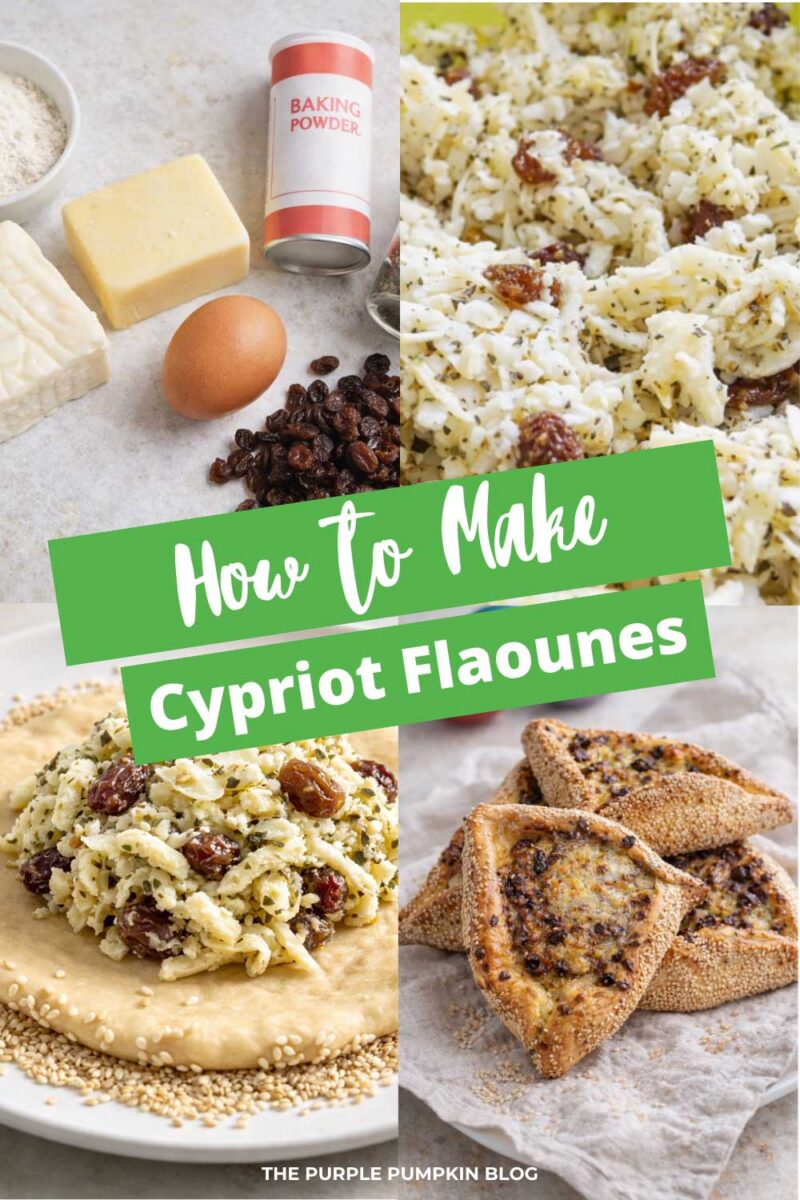
- Place the cheese, sultanas, dried mint, and beaten eggs into a bowl and mix together.
- Cover with a cloth and put in the fridge for a couple of hours or overnight.
- 15 minutes before assembling the flaounes, add the baking powder.
To Make the Dough
- Put the flour, sugar, salt, and masticha into a large mixing bowl.
- Add the melted butter, stir to combine, then add one egg and stir to combine.
- Add the other egg, warm milk and warm water and stir to bring everything together. If the mixture is a bit wet, add some more flour and form into a ball.
- Cover with a cloth and leave for one hour to rise.
To Assemble
- Preheat the oven to 200°C (Gas 6)
- Spread the sesame seeds out onto a dinner plate.
- Divide the dough into 6 pieces and roll into 18cm diameter circles.
- Brush egg wash over one side of the dough and press the egg side down into the sesame seeds.
- Grab a handful of the cheese filling and form into a ball. Place in the centre of the dough.
- Apply more egg wash around the filling and then bring the sides up pressing into the cheese ball to form a triangle, pinching the corners.
- Place on a greased baking sheet and cook in the oven for 30 – 40 minutes until golden.
- Serve warm with a cup of tea or coffee.
Notes
Tips
- Grate the cheese finely for a smoother filling texture.
- If you can’t find masticha, you can leave it out—the flavor will still be delicious.
- Rub dried mint between your hands to release more flavor.
- The dough is quite elastic, so it often springs back on itself, but persevere when rolling it!
Substitutions
- Use a mix of halloumi and mild cheddar for the best results.
- If halloumi isn’t available, try a firm, salty cheese as a substitute.
Leftovers
- Store in the fridge for up to 3 days.
- Reheat in the oven until warmed through for the best texture.
Freezing
- Freeze once cooled for up to 3 months.
- Thaw overnight and reheat in the oven before serving.
Nutrition
Nutritional information is always approximate and will depend on the quality of ingredients used and serving sizes. If you need exact calories and macros, please do your own calculations.
▼ Pin This Recipe to Pinterest ▼
Angelo Pantelides
April 19, 2020 @ 2:36 pm
GREAT QUICK RECIPE!