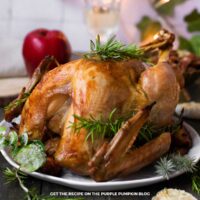
Roasted Turkey with Brine
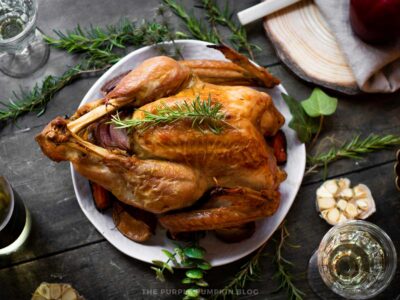
A brined holiday turkey roasted with herbs, garlic, and vegetables—a juicy, flavorful showstopper for Thanksgiving or Christmas.
Servings 14
Equipment
Ingredients
For the Brine
- 1½ cups sea salt
- ½ cup brown sugar
- 4 quarts cold water
- 18 pound whole turkey neck and giblets removed
- ½ cup unsalted butter melted, divided
- Freshly ground black pepper to taste
- 2 large onions chopped, divided
- 4 carrots coarsely chopped, divided
- 4 stalks celery chopped, divided
- 3 sprigs fresh rosemary divided
- 1 lemon quartered
- 1 head garlic halved horizontally
- 1 bay leaf
- 1 cup dry white wine
Instructions
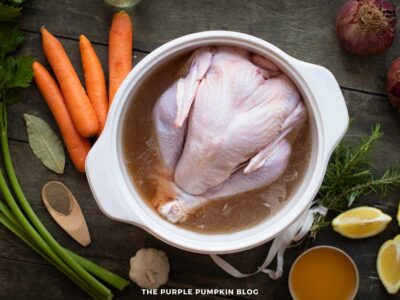
- Combine sea salt, brown sugar, and water in a large stockpot. Stir until dissolved.
- Submerge the turkey in the brine, cover, and refrigerate for 12 hours or overnight.
- Preheat the oven to 350°F/175°C/Gas 4.
- Remove turkey from brine, rinse well, and pat dry with paper towels. Discard brine.
- Brush the turkey inside and out with half the melted butter. Season the cavity with freshly ground black pepper.

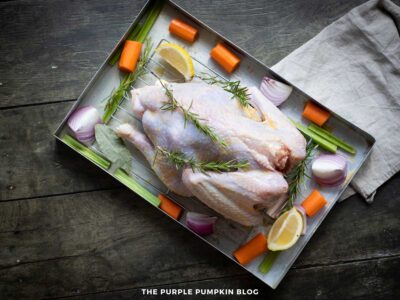
- Stuff with 1 onion, 2 carrots, 2 celery stalks, 1 rosemary sprig, lemon, and garlic.
- Place turkey breast-side down on a roasting rack. Add remaining onions, carrots, celery, rosemary, and bay leaf to the pan. Pour in white wine.
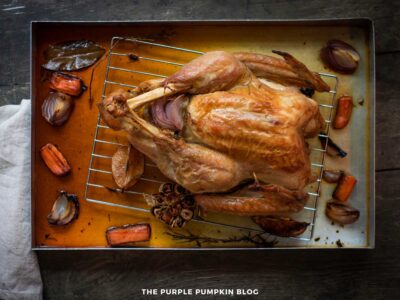
- Roast uncovered for 3½ to 4 hours.
- Two-thirds through cooking, turn turkey breast-side up and brush with remaining butter.
- Turkey is done at 165°F/74°C in the thickest part of the thigh and the juices run clear.
- Rest for 30 minutes before carving—serve accompanied by the roasted vegetables from the pan and your favorite sides. Enjoy!
Notes
Tips
- Resting the turkey is essential for juicy meat.
- Use a roasting rack so the heat circulates evenly.
- If the skin darkens too quickly, tent loosely with foil.
Substitutions
- Swap rosemary for thyme, sage, or a mix of both.
- Replace white wine with chicken broth if needed.
Leftovers
- Store leftovers in airtight containers for 3–4 days.
- Reheat gently in the oven or microwave to avoid drying.
Freezing
- Freeze carved turkey for up to 3 months. Thaw overnight in the fridge and reheat with a splash of broth.